How Cameras Affect Couple Dynamics and Therapeutic Outcomes
Does filming therapy sessions change how couples interact, what they disclose, or how effective the work ultimately becomes? This is one of the most pressing clinical questions that docuseries like Couples Therapy and Blue Therapy raise for MFTs, and the answer is more layered than a simple yes or no.
The Observer Effect in a Therapeutic Setting
Researchers in psychology have long recognized what is sometimes called the observer effect or reactivity: the phenomenon in which people alter their behavior when they know they are being watched. In a couples therapy context, the presence of cameras introduces a third party that neither partner invited into the relationship. Some clients may soften their language, suppress anger, or perform a version of themselves they consider more socially acceptable. Others may escalate conflict, consciously or not, because the stakes of being seen feel higher.
Professional counseling organizations such as AAMFT and ACA publish ethics guidelines and peer-reviewed research on recording in therapy, and their literature consistently emphasizes that any form of observation must be managed with care. While much of the existing research focuses on audio or video recording for supervision purposes rather than broadcast television, the core concern is the same: recording has the potential to shift both self-disclosure and the therapeutic alliance.
Self-Disclosure and the Therapeutic Alliance
Self-disclosure is the engine of productive couples therapy. When clients hold back, the therapist loses access to the very material that drives change. Academic databases like PsycINFO catalog a growing body of studies examining how recording influences willingness to share sensitive information. Though findings vary across populations and settings, a general pattern emerges: initial self-consciousness tends to decrease over time as clients habituate to cameras, but certain high-shame topics (finances, infidelity, substance use) may remain suppressed longer.
For MFTs watching Blue Therapy, it is worth asking which disclosures, such as hidden debt or in-law tensions, emerged naturally and which may have been shaped by the knowledge that millions of viewers would eventually witness the conversation. Therapist Karen Doherty's observation that the process is "not about quick fixes" hints at an awareness that depth takes time, and cameras can compress or complicate that timeline.
What the Research Landscape Looks Like
Specific outcome data comparing filmed therapy to private therapy remains limited. Most peer-reviewed literature addresses recording within training contexts, where COAMFTE-accredited programs regularly require students to record sessions for faculty review. These programs often publish educational research on practice-based evidence, and their curricula can give MFTs a useful framework for understanding how observation dynamics play out even without a Netflix audience.
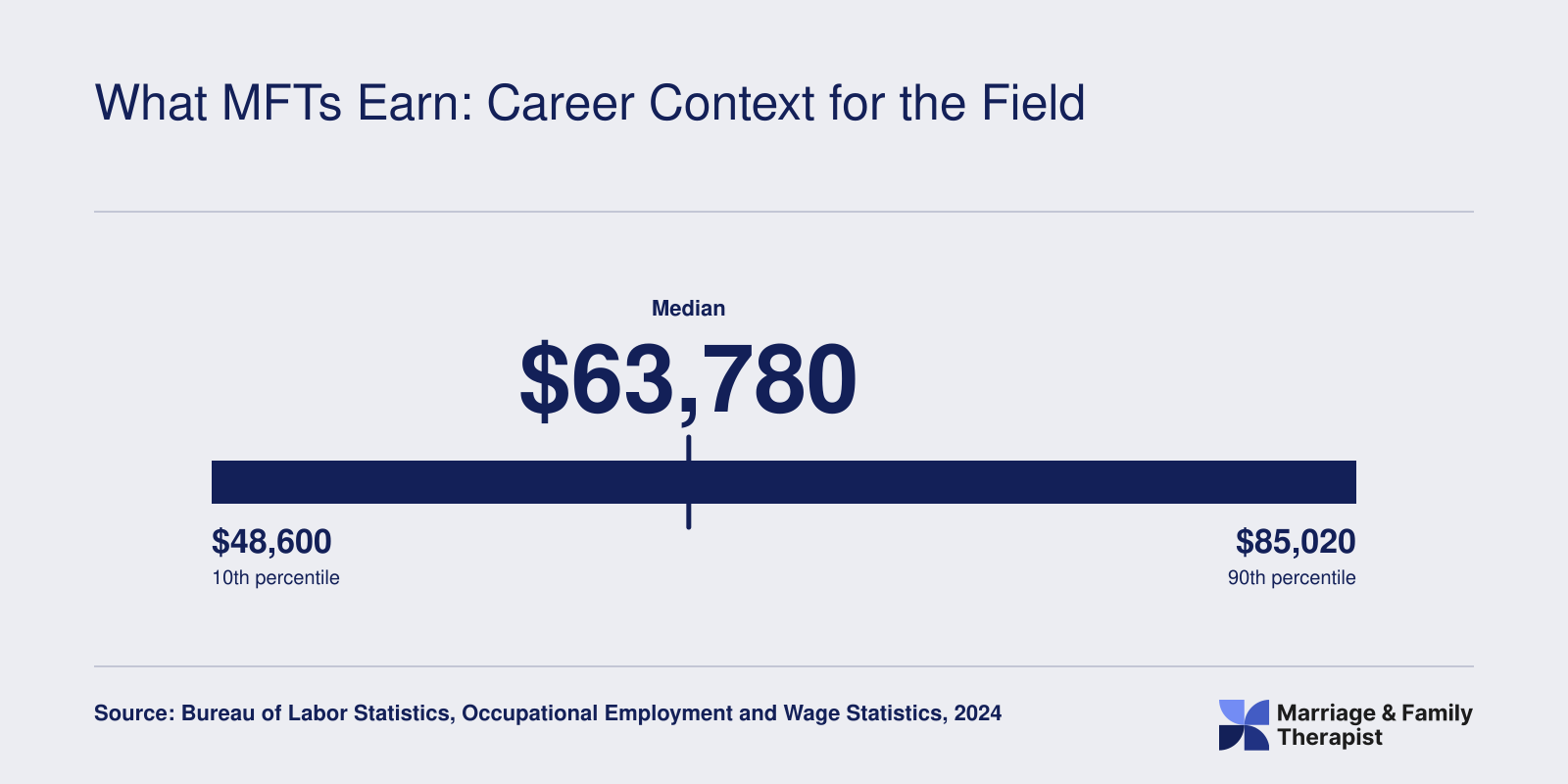
Government sources like the Bureau of Labor Statistics provide workforce data on marriage and family therapists but do not track therapy outcome variables. For clinicians seeking hard numbers on how cameras change results, the best path is searching academic databases using terms related to therapy observation and self-disclosure, then filtering for peer-reviewed sources.
Practical Takeaways for Clinicians
MFTs can draw several lessons from the camera question, whether or not they ever film a session themselves:
- Habituation matters: Clients in both training recordings and docuseries tend to become more natural over time, but the therapist must actively monitor for lingering self-consciousness.
- Power dynamics shift: Cameras can amplify existing imbalances in a couple. One partner may perform composure while the other feels exposed.
- Informed consent is ongoing: Agreeing to be filmed at intake is not the same as feeling comfortable with it in session four. Consent should be revisited regularly.
- Context shapes disclosure: What a client reveals on camera may differ meaningfully from what they would share in a private office, and MFTs should factor this into any clinical assessment drawn from televised sessions.
Ultimately, therapy docuseries give MFTs a rare window into another clinician's room, but that window has a lens attached to it. Recognizing how that lens bends the light is part of watching with clinical rigor rather than casual curiosity.